Schools/Yokohama/
Kanrin Japanese Language School
Yokohama
·Aobadai
Kanrin Japanese Language School
翰林日本語学院
Since 1987
25 min to Shibuya
Beginners welcome
About the school
A Japanese language school in the quiet, green Aobadai district of Yokohama, 3 minutes from the station and about 25 minutes by train from Shibuya. It has been teaching since 1987 and welcomes complete beginners.
Founded1987
Students from40+ countries
Course length15 months – 2 years
IntakesApr · Jul · Oct · Jan
What makes it different
Quiet Yokohama, 25 minutes from Shibuya
Kanrin is in Aobadai, a green residential district: 3 minutes from the station, with housing and everyday life cheaper than in central Tokyo, and Shibuya about 25 minutes away by train. Since 1987 more than 10,000 students have studied here.
Support
Advice in several languages
Staff speak Japanese, English, Chinese, Korean and Vietnamese, and help with paperwork, study, choosing a university and daily life.
Location
Aobadai — 25 minutes to Shibuya
A quiet, green district of Yokohama, 3 minutes from the station on the Tokyu Den-en-toshi Line. Living here is cheaper than in central Tokyo.
Results
About 100 admissions a year
Of 183 graduates in the last academic year, 101 entered Japanese universities and colleges. Universities include Waseda, Keio, Meiji, Chuo, Hosei and Yokohama National University.
Experience
Since 1987, 10,000+ graduates
Students from more than 40 countries, usually 10–19 per class. Every class has a teacher in charge of university entry and job hunting.
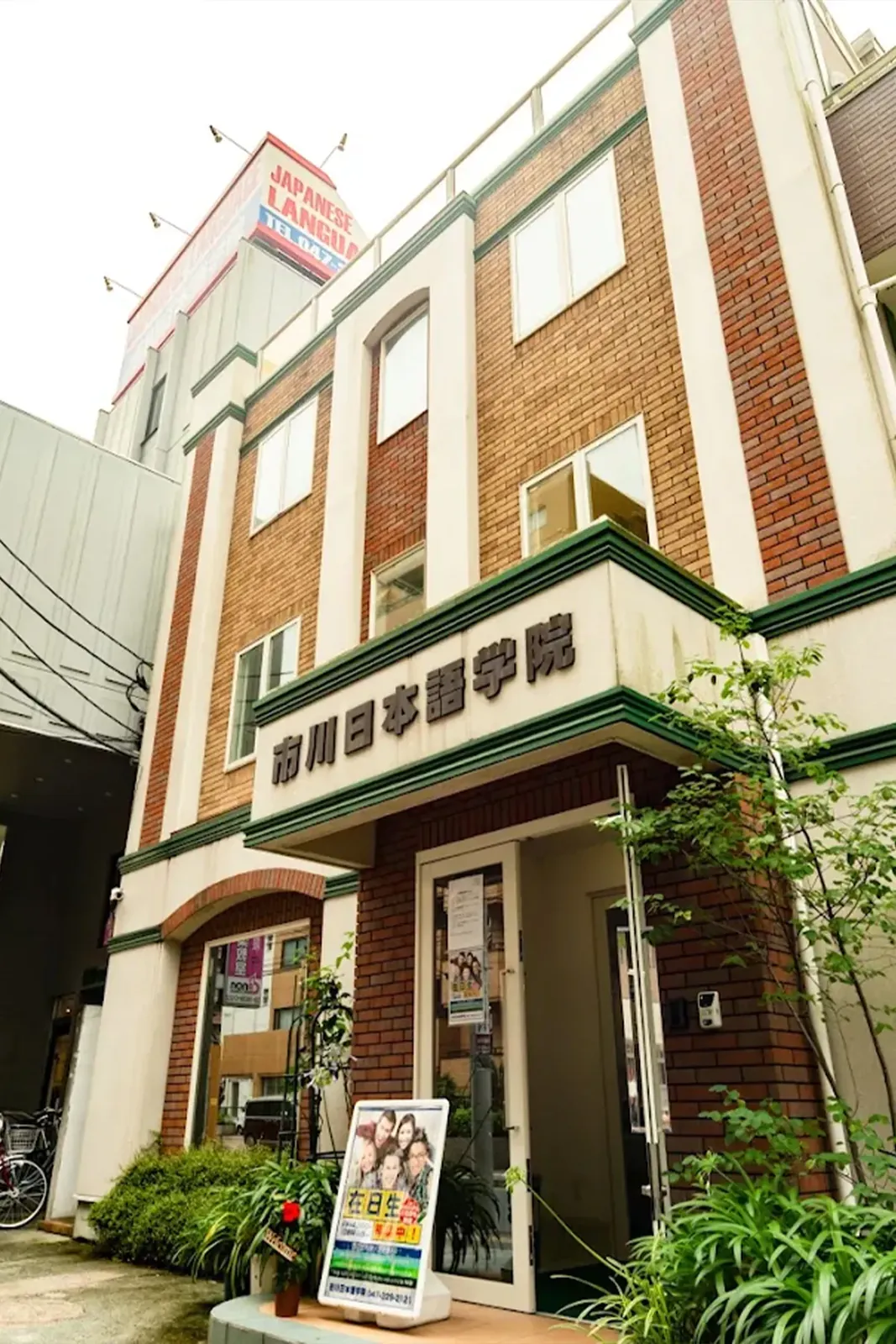
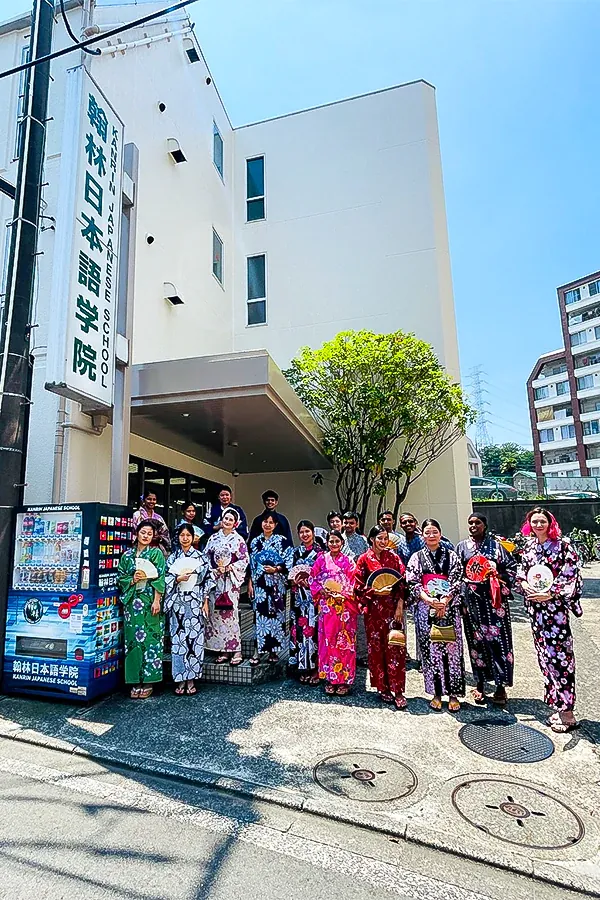
Kanrin (翰林日本語学院) was founded in 1987 and is in Aobadai (Aoba ward, Yokohama), 3 minutes on foot from the west exit of Aobadai Station on the Tokyu Den-en-toshi Line. Shibuya is about 25 minutes away by train and central Yokohama about 40 minutes. It is a quiet, green residential area with universities, shopping centres, gyms and cafés, and prices are lower than in central Tokyo.
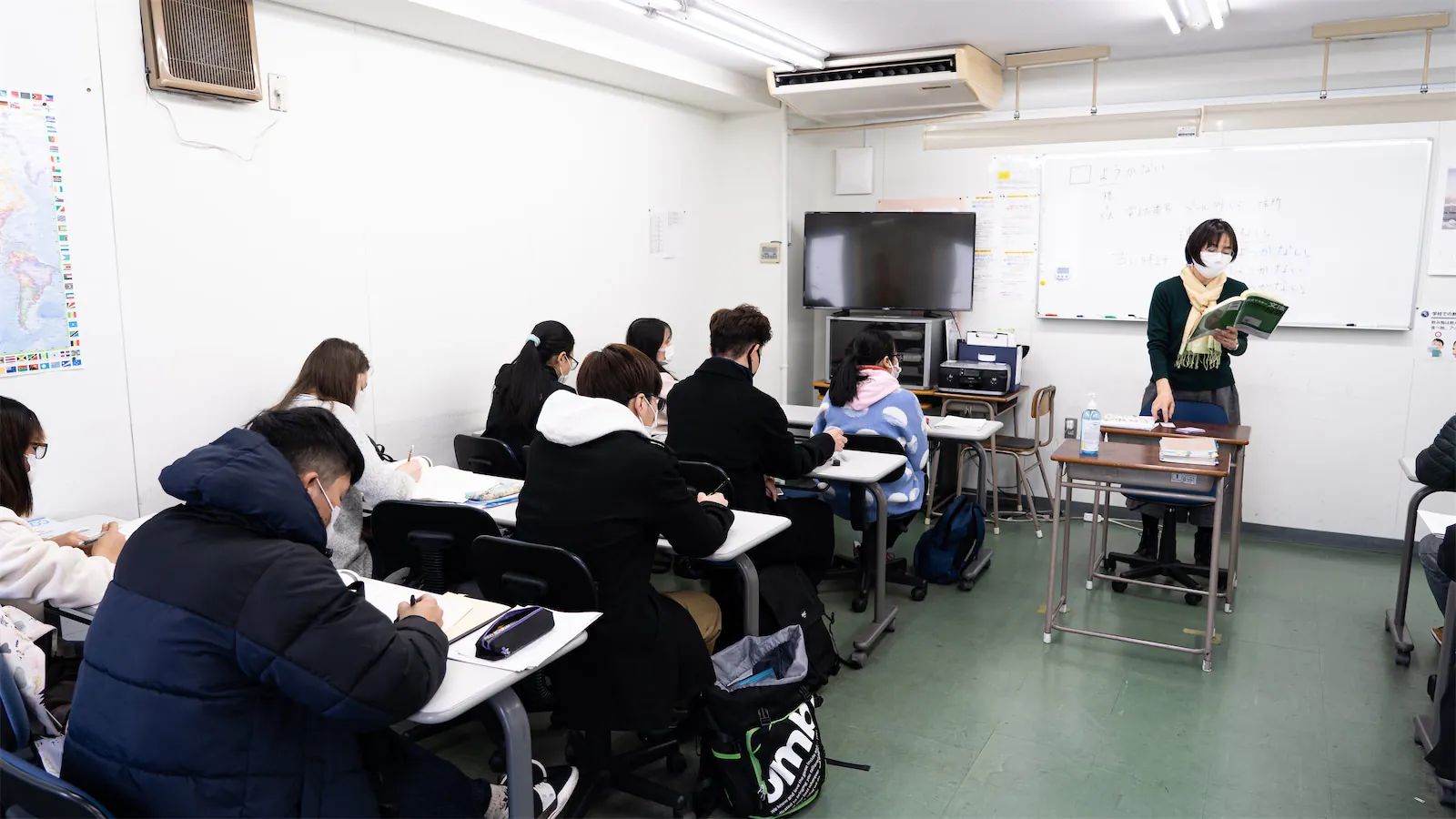
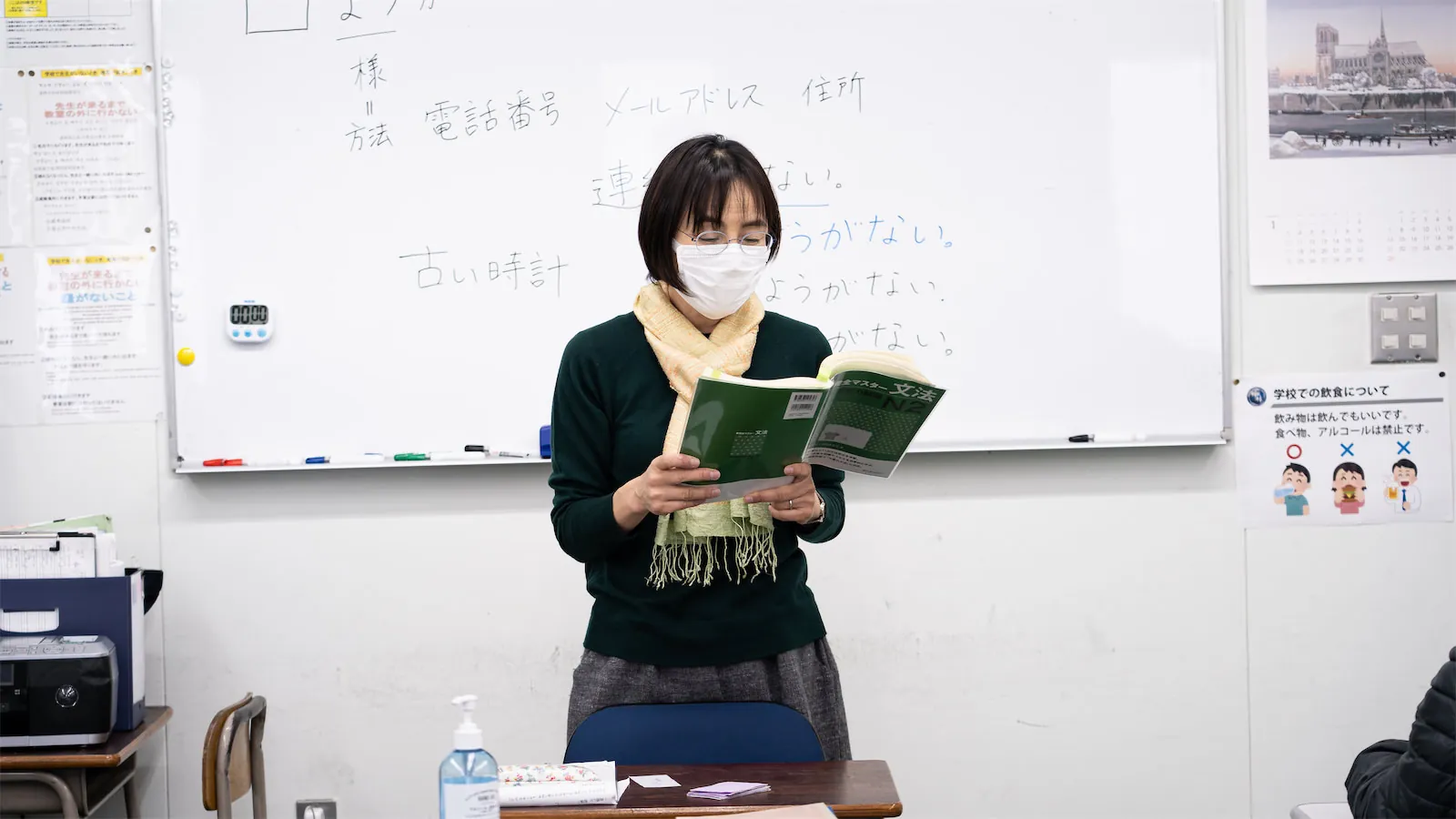
The school takes student-visa students on courses from 1 year 3 months to 2 years, with four intakes a year. Classes are 4 hours a day, Monday to Friday, taught only in Japanese. There are classes for complete beginners (starting from the kana), and later students choose a track: university entrance with the EJU and interviews, college, graduate school or finding a job. Classes have up to 20 students, usually 10–19.
The school’s founder and principal, Hiroshi Nagaoka, sees Japanese as a language of dialogue between people of different cultures — today the school has students from more than 40 countries. Graduates enter Waseda, Keio, Meiji, Chuo, Hosei and Yokohama National University, and graduate schools at the universities of Tokyo and Kyoto.
Programs
Long-term course on a student visa
From age 18, with completed secondary education; you can start from zero. The beginner stage takes about 8 months — N5–N4 grammar and conversation with Minna no Nihongo; the goal is N3.
Whole course, including insurance¥1,150,500 – ¥1,765,000
University preparation
For students at N3 or above: N2–N1 Japanese, EJU and entrance exam preparation, essays, presentations and mock interviews. Teachers guide you from choosing a university to enrollment. Extra paid EJU classes (general subjects, English, maths) cost ¥45,000 per subject.
College and graduate school preparation
College track: a focus on the JLPT and all four skills, with planned preparation for early entrance exams. Graduate school track: a separate class for students applying to Japanese graduate schools — language plus preparing your application for each university’s requirements.
Short and online courses
Short course: 4 hours a day in existing classes, for students who already have a tourist or other visa (1 month ¥120,000, 2 months ¥185,000, 3 months ¥240,000, plus ¥5,000 insurance). Online course: about 150 hours at your own pace, with assignments and one-to-one lessons with a teacher — you can take it before coming to Japan.
First-year costs
Application fee¥30,000
Enrollment fee¥70,000
Tuition, first year¥780,000
Other fees, first year¥65,000
Total, first year¥945,000
Whole course, 2 years — ¥1,765,000
Payment terms and extra costs
Scholarships and discounts
JASSO scholarship — ¥30,000 a month
The school nominates students with high attendance and good grades for the Japan Student Services Organization (JASSO) scholarship. Places are limited.
School scholarship and second-year tuition reduction
The best students can receive the school’s own scholarship or a partial waiver of second-year tuition.
Cash prizes
In the annual speech contest the top three receive a cash prize and a certificate. At graduation the students with the best results receive separate awards.
Intakes
April Main intake
2-year course. Applications for April 2027 close in October 2026; the school closes earlier if classes are full.
July Summer intake
1 year 9 months. Ask us for the deadline — applications go to immigration several months before the course starts.
October Autumn intake
1 year 6 months. Ask us for the deadline.
January Winter intake
1 year 3 months. Ask us for the deadline. Short courses for people already in Japan start at any time when there is a class at the right level.
The school applies for your Certificate of Eligibility; with the visa this takes about 4–6 months. Places are limited — apply early.
Student visa. For a long-term course you study on the Student status of residence: the school applies for your Certificate of Eligibility, then you get the visa at a Japanese embassy or consulate. Student visa for Japan · Which documents do I need?
Working while you study. With permission, up to 28 hours a week: Part-time work for students
Housing
Through partners
Partner dormitories and guesthouses
Price on requestdepends on the room type
The school has no dormitory of its own, but there are partner dormitories, guesthouses and monthly-rent apartments 15–25 minutes on foot from the school. Rooms are furnished with a desk, chair, bed and small fridge; kitchen, bathroom and laundry are shared.
Living in Aobadai
Near the school and the dormitories there are supermarkets, department stores, restaurants, a hospital, gyms and parks. Prices are lower than in central Tokyo, and Shibuya is about 25 minutes away by train.
Getting there from the airport
About 1 hour from Haneda or about 2 hours from Narita by bus to Tama-Plaza Station, then 2 stops on the Den-en-toshi Line express to Aobadai.
Photos and videos
Location
5-3 Enokigaoka, Aoba-ku, Yokohama, Kanagawa 227-0063 — 3 minutes on foot from the west exit of Aobadai Station (Tokyu Den-en-toshi Line), about 25 minutes by train to Shibuya
Questions about Kanrin Japanese Language School
What are the entry requirements?
You must be 18 or older with completed secondary education — a school leaving certificate or higher. The school’s website does not require 12 years of education; if you have 11 years, we will check your case with the school in advance. You also need a financial sponsor, usually a parent, with proven income and about ¥3,000,000 (or $30,000) in the bank.
Can I start with no Japanese at all?
Yes, some classes start from the kana. But for a student visa you need to show that you have already studied Japanese: a course certificate or a level certificate is part of the application.
How much does the first year cost?
For intakes from January 2027 a year costs ¥945,000 including insurance: application fee ¥30,000, enrollment fee ¥70,000, tuition with textbooks ¥780,000 and other costs ¥65,000. The whole 2-year course is ¥1,765,000 including insurance.
Is a school in Yokohama far from Tokyo?
No. Aobadai is on the Tokyu Den-en-toshi Line: about 25 minutes by train to Shibuya and about 40 minutes to central Yokohama. The area is quiet and green, and housing and everyday costs are lower than in central Tokyo.
Is there a dormitory?
There is no school dormitory, but the school helps you find a place in partner dormitories, guesthouses and monthly-rent apartments 15–25 minutes on foot from the school. Rooms are furnished; kitchen and bathroom are shared. Prices on request.
Can I work part-time and get a scholarship?
With a student visa and permission you can work up to 28 hours a week (8 hours a day in school holidays). The school nominates the best students for the JASSO scholarship (¥30,000 a month) and has its own scholarship and a partial waiver of second-year tuition.
Compare