Schools/Tokyo/
Ohara Japanese Language School
Tokyo
·Funabori, Edogawa
Ohara Japanese Language School
大原日本語学院
Course for 11-year grads
O-HARA group
196 admissions a year
About the school
Ohara is the Tokyo Japanese school of the large O-HARA education group, open since 2002 and 3 minutes from Funabori Station. It prepares students for Japanese universities, graduate schools and vocational colleges, and runs a preparatory course for students with 11 years of school.
Founded2002
Students from10+ countries
Course length1–2 years
IntakesApr · Jul · Oct · Jan
What makes it different
Into a Japanese university after 11 years of school — with the O-HARA group
The school runs a preparatory course (準備教育課程) for students with fewer than 12 years of school education; after it you can apply to Japanese universities. Behind the school is the O-HARA group — more than 100 schools across Japan — and in the 2025 academic year 196 graduates entered Japanese universities, graduate schools and vocational colleges.
Education group
Part of the O-HARA group
Since 1957, more than 100 schools across Japan. EJU subjects are taught by the group’s full-time teachers, and graduates also get help entering the group’s own colleges.
University after 11 years of school
The preparatory course
For graduates of 11-year school systems: the course counts as the missing year and opens the way to Japanese universities.
Admissions
196 admissions in 2025
Graduates have entered the University of Tokyo, Kyoto University, Hitotsubashi, Tsukuba, Keio, Waseda and Sophia — for bachelor’s and master’s degrees.
Location
A quiet area, 25 minutes to Tokyo Station
3–4 minutes from Funabori Station (Edogawa). About 25 minutes to Tokyo Station and 29 minutes to Shinjuku with no change. Housing is cheaper than in the centre.
Ohara (学校法人大原学園 大原日本語学院) is the Japanese language school of the O-HARA education group, which has grown since 1957 from a single bookkeeping school in Tokyo into a network of more than 100 schools across Japan. The Japanese department has run since 2002 and in 2018 moved into a large building in Funabori (Edogawa), 3–4 minutes from the station on the Toei Shinjuku Line. Tokyo Station is about 25 minutes away and Shinjuku 29 minutes with no change, yet the area is quiet and living here costs less than in the centre.
The main focus is preparation for further study in Japan. Courses last from 1 to 2 years and cover Japanese from beginner to beyond N1, JLPT and EJU preparation, essays and interviews. From April to September there are paid classes in EJU basic subjects (general subjects, mathematics, physics, chemistry, TOEFL/TOEIC), taught by full-time teachers of the O-HARA group. For graduates of 11-year school systems there is the preparatory course (準備教育課程), after which you can apply to Japanese universities.
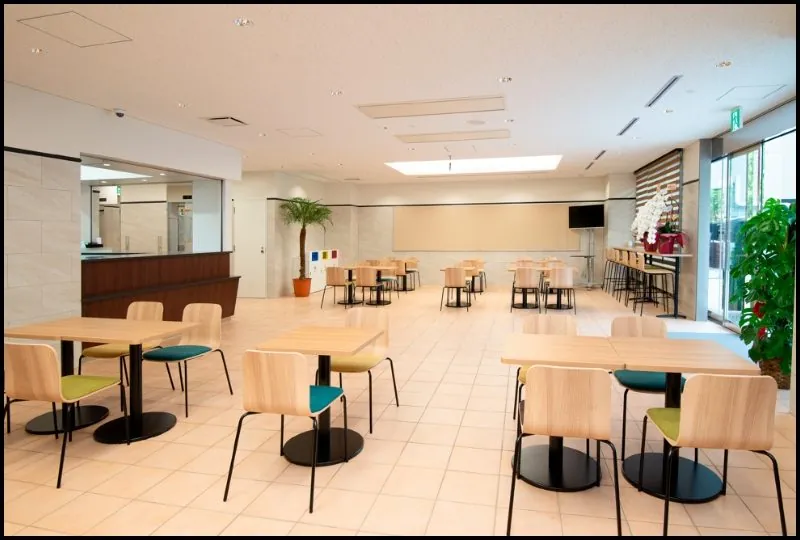
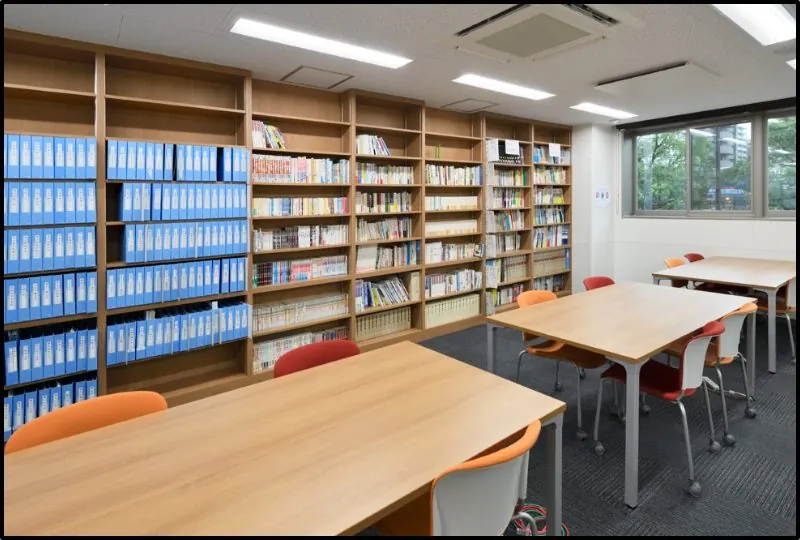
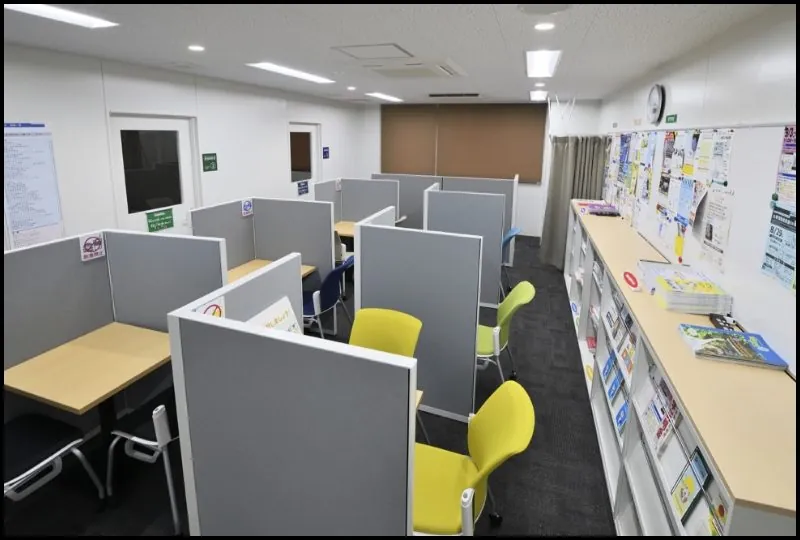
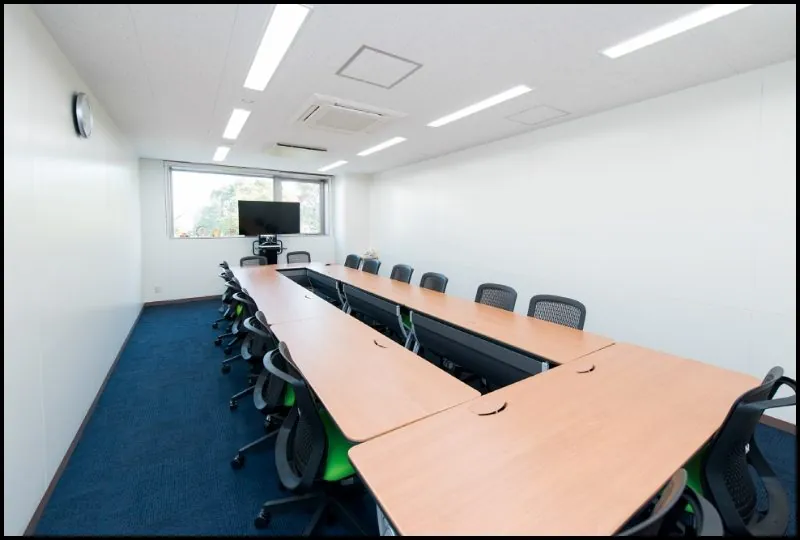
In the 2025 academic year 196 graduates entered Japanese universities, graduate schools and vocational colleges, including the University of Tokyo, Kyoto University, Hitotsubashi, Tsukuba, Keio, Waseda and Sophia, as well as the O-HARA group’s own colleges. For students who want to work in Japan there is business Japanese, etiquette, and help with CVs and interviews. The building has a library, a student hall, a careers counselling room and a Japanese-style room.
Programs
University Preparation Course (進学コース)
Morning (9:00–12:10) or afternoon (13:00–16:10) classes, assigned after a placement test. Five levels from beginner (N5–N4) to advanced (beyond N1): vocabulary, grammar, reading, listening, speaking, group tasks, JLPT and EJU preparation, news and current topics.
Whole course¥800,000 – ¥1,490,000
Preparatory Course (準備教育課程)
For students with fewer than 12 years of school education. Besides Japanese (800 hours a year): English, mathematics, history and geography. When you finish you can apply to Japanese universities.
Whole course¥920,000 – ¥1,265,000
EJU basic subjects
Humanities: general subjects, Mathematics 1, TOEFL/TOEIC; sciences: Mathematics 2, physics and chemistry. Taught by full-time teachers of the O-HARA group. ¥35,000–¥55,000 per subject.
Admissions and career support
Graduate school — help with your research plan (研究計画書). Universities and colleges — essays, interviews and choosing a school, including O-HARA group colleges. Work — business Japanese, etiquette, CVs and interviews.
First-year costs
Application fee¥30,000
Enrollment fee¥80,000
Tuition, first year¥580,000
Other fees, first year¥110,000
Total, first year¥800,000
Whole course, 2 years — ¥1,490,000
Payment terms and extra costs
Scholarships and discounts
JASSO scholarship — ¥30,000 a month
The school’s official website lists no scholarships of its own. Language school students with good attendance and grades can be nominated by their school for the JASSO scholarship for Japanese language school students; ask us about places and conditions. Tuition can be paid in instalments by arrangement with the school.
Intakes
April Main intake
2-year course (N5 and above) or 1-year course (N3 and above), plus the 1-year preparatory course for upper-intermediate students. Apply by the end of October of the previous year.
July Summer intake
1 year 9 months (N5–N4 and above). Apply by the end of February.
October Autumn intake
1 year 6 months (N4 and above) and the main intake for the preparatory course (1.5 years). Apply by mid-May.
January Winter intake
1 year 3 months (N3 and above). Apply by the end of August of the previous year. If a class fills up, applications close early.
The school applies for your Certificate of Eligibility; with the visa this takes about 4–6 months. Places are limited — apply early.
Student visa. For a long-term course you study on the Student status of residence: the school applies for your Certificate of Eligibility, then you get the visa at a Japanese embassy or consulate. Student visa for Japan · Which documents do I need?
Working while you study. With permission, up to 28 hours a week: Part-time work for students
Housing
Through the school
Apartments for international students
from ¥55,000 / month1K studio with its own bath and toilet
4 and 10 minutes on foot from school. Book through the school or an agency once your visa is issued.
Share house
from ¥55,000 / monthprivate room of about 9 m²
10 minutes by train from school. The school gives these options as examples — you can also find housing yourself.
Photos and videos
Location
1-4-14 Funabori, Edogawa-ku, Tokyo 134-0091 — 3–4 minutes on foot from Funabori Station (Toei Shinjuku Line)
Questions about Ohara Japanese Language School
Can I start with no Japanese at all?
Not from complete zero. The 2-year course (April) and the 1 year 9 months course (July) need at least N5 or proven knowledge at that level, the October intake needs N4, and the January intake and the 1-year course need N3. On arrival there is a placement test to assign your class and time slot.
I have 11 years of school. Can I get into a Japanese university?
Yes — that is what the preparatory course (準備教育課程) is for, for students with fewer than 12 years of school education: 1.5 years (October intake) or 1 year (April, for upper-intermediate students). After it you can apply to Japanese universities. The regular University Preparation Course requires 12 years of education — except for students who do not plan further study in Japan.
How much does it cost?
The first year is ¥800,000: application fee ¥30,000, enrollment fee ¥80,000, tuition ¥580,000 and other costs ¥110,000. The second year of the 2-year course is ¥690,000, ¥1,490,000 in total. The 1.5-year preparatory course is ¥1,265,000. EJU basic-subject classes are extra.
Is the school far from central Tokyo?
The school is in Funabori (Edogawa), 3–4 minutes from the station on the Toei Shinjuku Line. Tokyo Station is about 25 minutes away and Shinjuku 29 minutes with no change. The area is quiet, and housing and daily life cost less than in the centre.
Where can I live and how much does it cost?
The school offers apartments for international students 4 and 10 minutes from school and a share house 10 minutes away by train — from ¥55,000 a month. You can also rent on your own. Housing is booked closer to arrival, once your visa is issued.
Does the school help with part-time work?
Yes, the school shares job openings — shops, supermarkets, hotels and restaurants. With a student visa and permission you can work up to 28 hours a week (8 hours a day in school holidays).
Compare